
We often receive requests to help greyhounds who have started to freeze when out on their walk. This is more common in sighthounds than you might think – and there are lots of ways to help you both enjoy your walks again.
Why do some greyhounds freeze on walks?
You’re enjoying a leisurely walk with your greyhound and suddenly, they put on the brakes and won’t move. It can appear like your dog’s paws are superglued to the pavement or that your dog is being ‘stubborn’ as you just can’t get them to move.
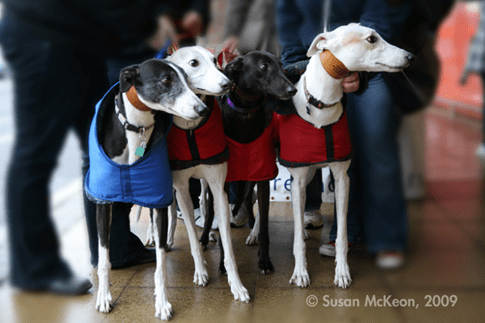
It can be easy for us to misunderstand why our hounds behave in a certain way however, the reason for freezing is not that your hound is being “stubborn” or “dominant” (both misused and misunderstood terms when it comes to dog behaviour). It is more likely that your dog is scared, overwhelmed or worried by something in their environment, and it is the underlying emotion of fear that has caused them to ‘apply the brakes’.
The things we take for granted in everyday life are, for some greyhounds, completely alien and scary.
Being a family pet is a wonderful opportunity for them to enjoy a lot of new things – but initially these can be quite overwhelming.
The flight or fight response
Most of us have heard of the ‘flight or fight’ response – when faced with a threatening situation we can choose to run away (flight) or resist forcibly (fight). Our dogs have the same response mechanism to things they view as potential threats, but with the addition of the freeze/planting behaviour – being rooted to the spot, in response to a perceived threat.
As our greyhounds are on-lead when they encounter a scary thing, their option to move away (flight) is removed which is why they freeze. They may just freeze/plant for a matter of seconds (which you may not notice), or they may suddenly stop and refuse to move forward.
Overcoming fears and getting moving again
To help our greyhounds adjust to these new experiences and overcome their fears, they need our time, patience, understanding and training using reward-based training methods.
The key thing to remember is not to force your dog to move towards the thing they fear as this is counterproductive, making it likely for them to be more afraid of walks. Avoid physically dragging/pushing your dog at all costs, as this will simply add to their feelings of worry and stress.
- If your dog plants, first give them the option to turn back and go home – they may have had enough of the outside world for today! If you can identify something specific which is worrying your dog, give them the option to walk away from it.
- If they don’t want to turn back, the best option is just to be patient. Give your dog time to process their emotions, by simply waiting until they choose to start walking again. This can take anywhere from a few seconds to ten minutes! Once they choose to start walking again, you can reward this decision with a treat. Try to avoid using a treat to lure them into moving unless you have no other choice, since you may inadvertently teach them that stopping earns them a reward!
- If your dog seems keen to go in a certain direction (but you know that route isn’t an option) try starting to walk in that direction, then circling back round once they’re moving – they will often be happy to keep going once they have some momentum!
- Greyhounds often seem to plant when you try to turn and head back in the direction you came, so try to find a looped route walk if you can.
- If you find your dog is planting a lot, you may need to try a shorter walk, a quieter walking area or even give them a break from walks entirely and more time to settle at home before trying again. They may also be planting due to physical pain or discomfort.
Further help
If your dog continues to freeze on walks, please do contact our Post Homing Support Team for help by emailing behaviour@foreverhoundstrust.org
For a downloadable copy of this info, please click here
The information provided in this document provides general guidance on the matters outlined and is not intended to replace the need for you to take qualified and appropriate behaviour/training advice on these matters.
Please remember, that as an owner of a Forever Hounds Trust dog you have access to our team of qualified behaviourists and FREE behaviour and training advice. No matter what your behaviour or training question is, we are here to help. You can contact the team by emailing behaviour@foreverhoundstrust.org.
Reviewed April 2025
This factsheet is the property of Forever Hounds Trust and is protected by copyright. It must not be reproduced, modified, or rebranded in whole or in part without the express permission of Forever Hounds Trust. Where any part of this material is used or referenced elsewhere, appropriate credit must be given to Forever Hounds Trust.